
Core Technology Overview
Platform technology empowering neuroscience research
Ultrasound-mediated blood-brain barrier opening
A new non-invasive route for drug delivery, offering innovative solutions for treating central nervous system disorders
Technical Principles
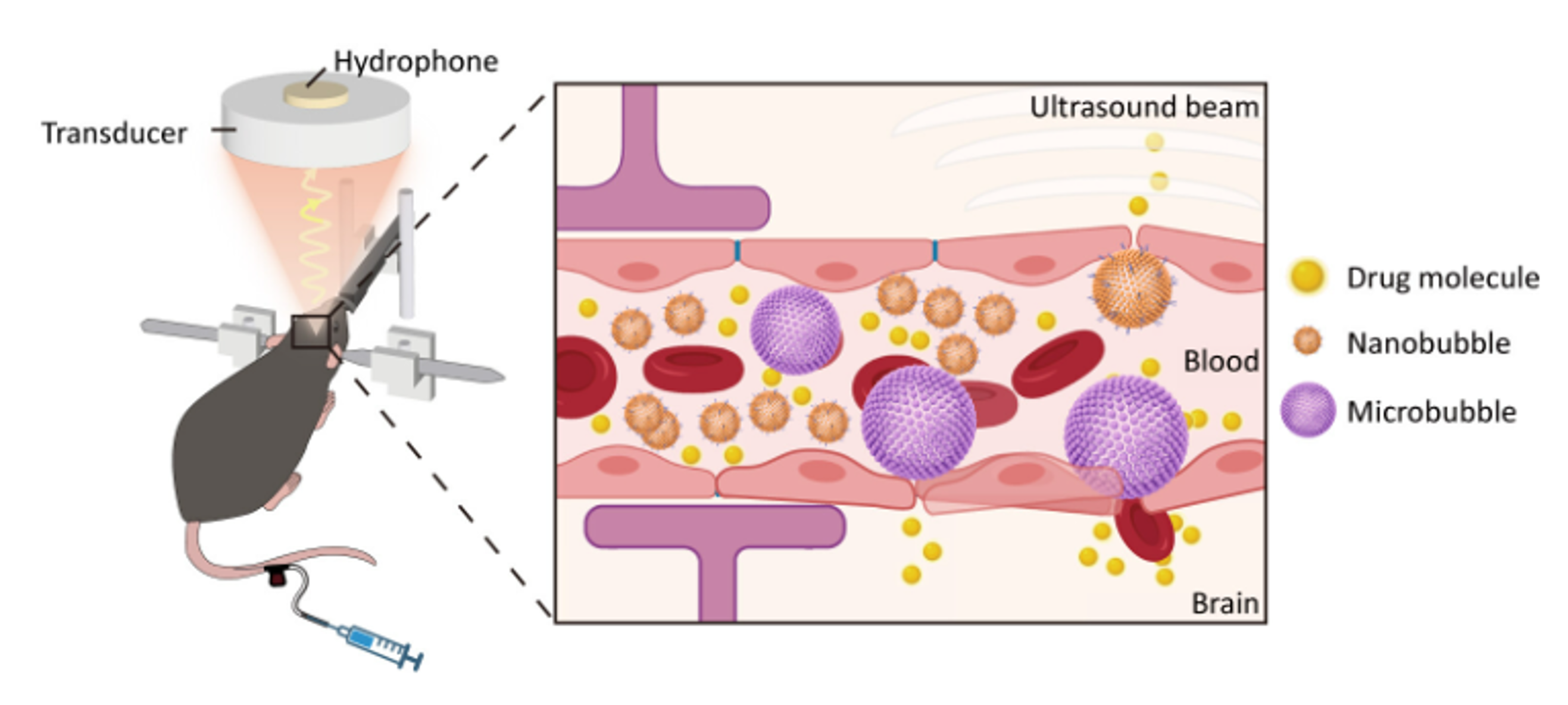
Focused Ultrasound Localization
Using a high-precision focused ultrasound system, precisely target brain regions with millimeter-level accuracy.
Microbubble vibration effect
After injecting a nano-bubble contrast agent, ultrasound induces stable oscillation of the microbubbles, generating mechanical effects.
Blood-brain barrier temporarily open
Microbubble vibrations temporarily loosen tight junctions between cerebral endothelial cells, enabling reversible opening of the blood-brain barrier.
Drug delivery into brain tissue
The therapeutic drug enters brain tissue via the open blood-brain barrier for targeted delivery, which automatically restores within hours.
Use Cases
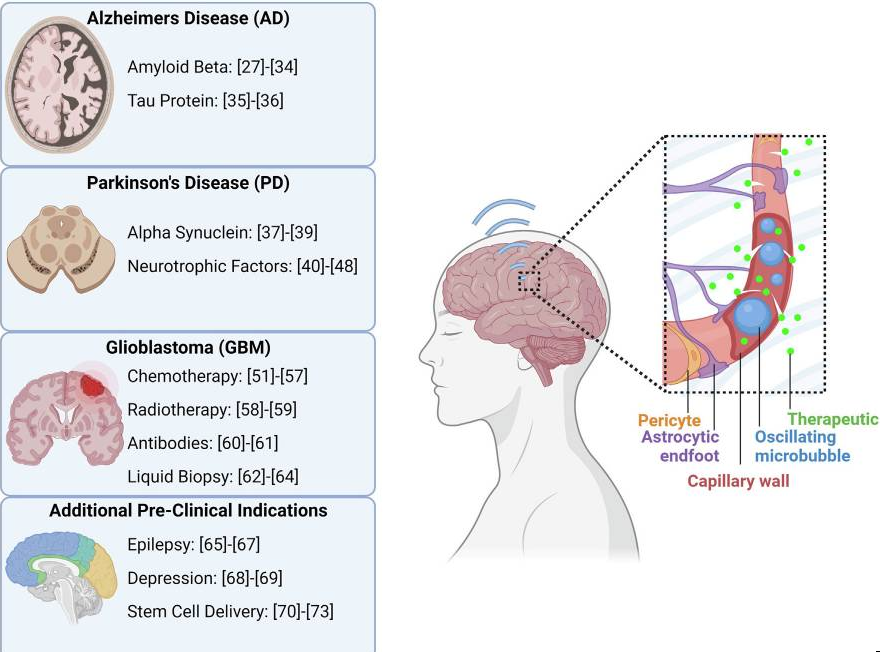
Alzheimer's disease
Drug delivery clears beta-amyloid and slows disease progression
Brain tumor treatment
Targeted delivery of chemotherapy drugs to tumor tissues to enhance efficacy
Parkinson's disease
Targeted drug delivery to relieve symptoms
Mental Disorders
Deliver targeted drugs to specific associated regions to improve treatment efficiency.
Transcranial Neuromodulation
Non-invasive neural modulation: Exploring new approaches to brain function and neurological disease treatment
Technical Principles
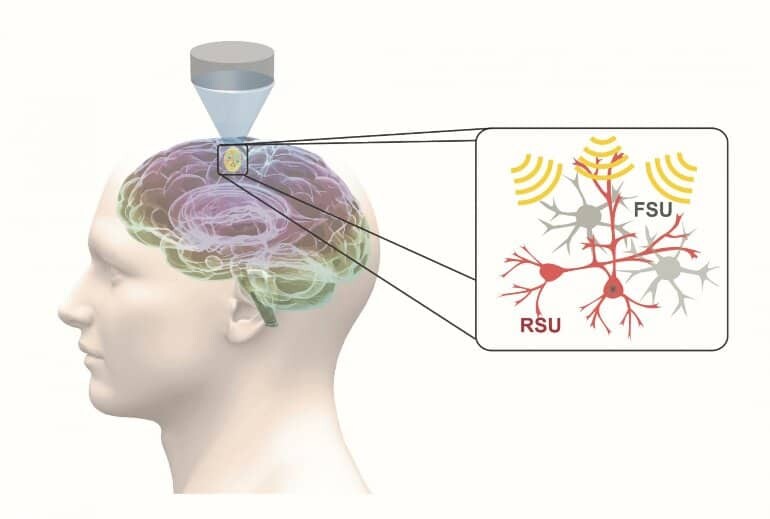
Non-invasive transcranial therapy: safer
Uses low-frequency ultrasound to effectively penetrate the skull barrier with minimal energy attenuation.
Mechanically stimulate neurons
Ultrasound mechanical effects activate mechanosensitive ion channels on neuronal membranes, modulating neuronal excitability.
High-resolution positioning for greater accuracy
Adjust ultrasonic parameters (frequency, intensity, pulse mode) to achieve excitatory or inhibitory modulation.
Reversible and non-invasive
Low-intensity ultrasound causes no thermal damage, offers reversible effects, and ensures high safety.
Use Cases

Depression Treatment
Modulate the prefrontal cortex to alleviate depressive symptoms
Chronic Pain Management
Modulate pain-related brain regions to alleviate chronic pain.
Epilepsy control
Suppress abnormal discharges to reduce seizures
Brain Function Research
Deciphering the relationship between neural circuit function and behavior
Thermal Ablation / Hyperthermia Therapy
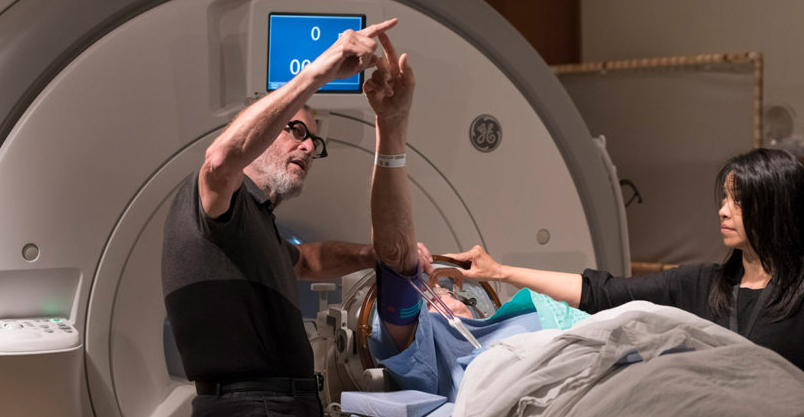
MRI-guided precision hyperthermia for tumor ablation and sensitization therapy
Technical Principles
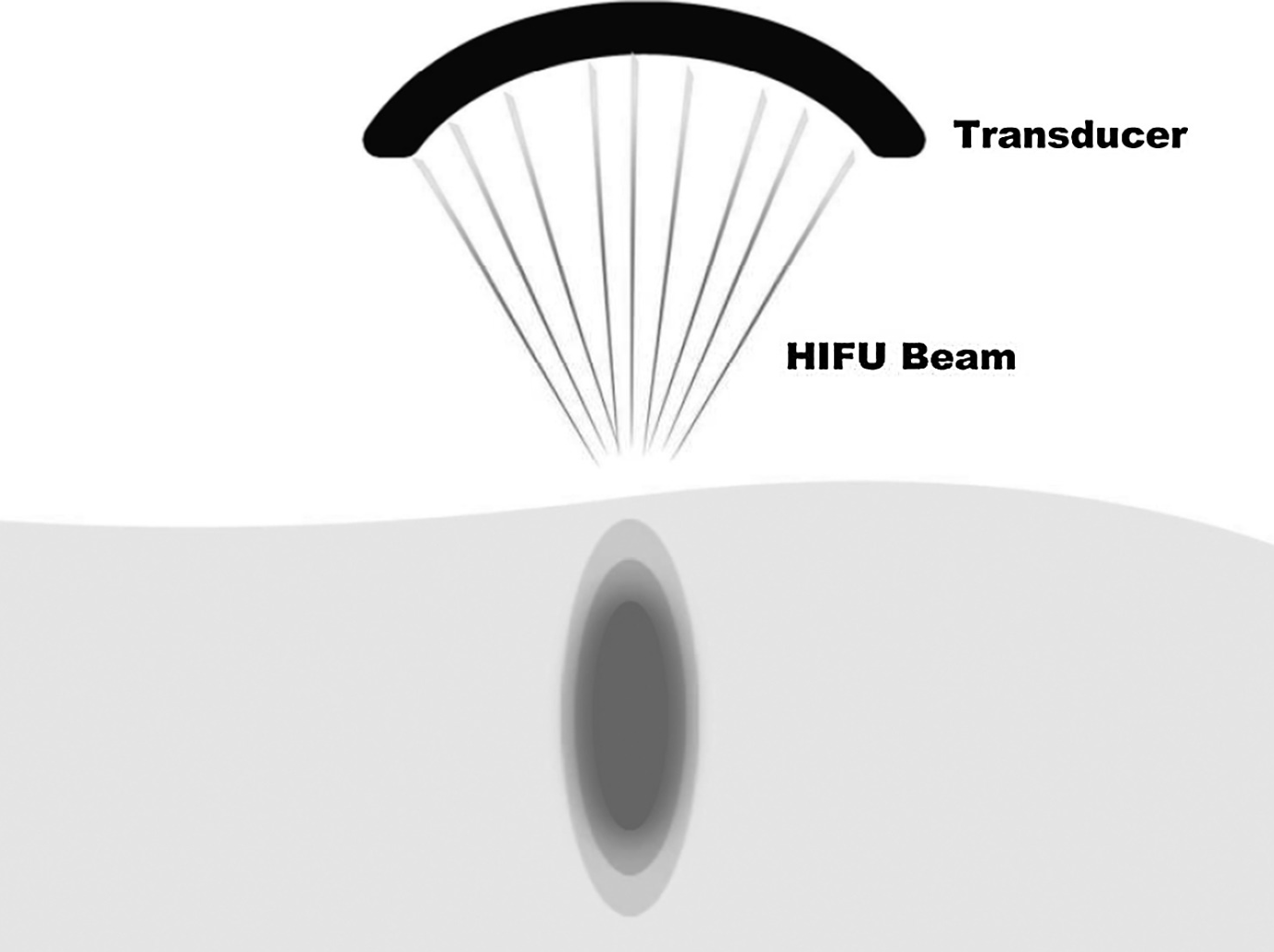
High-Intensity Focused Ultrasound
Uses high-intensity focused ultrasound to generate heat at the target site (60-85°C).
MRI temperature imaging monitoring
Real-time MR thermometry sequences provide target temperature data with an accuracy of 1°C.
Thermal Ablation Effect
High temperatures denature proteins and cause coagulative necrosis in cells, achieving tumor ablation.
Hyperthermia Sensitization
Moderate temperatures (40-45°C) enhance tumor sensitivity to radiation and chemotherapy.
Use Cases
Parkinson's disease
Precision ablation targets to improve tremors and rigidity
Chemoradiation Sensitization
Hyperthermia enhances tumor cell uptake and sensitivity to radio-chemotherapeutic agents
OCD
Noninvasive ablation of abnormal circuits to relieve symptoms
Immune Regulation
Localized heating releases tumor antigens and activates anti-tumor immune responses.
References
W. Li, J. Hu, B. Cheng, et al., Precise antibody delivery to the brain via nanobubble-actuated focused ultrasound alleviates depressionProc. Natl. Acad. Sci. U.S.A.122 (35) e2421800122, https://doi.org/10.1073/pnas.2421800122 (2025).
Gorick CM, Breza VR, Nowak KM, Cheng VWT, Fisher DG, Debski AC, Hoch MR, Demir ZEF, Tran NM, Schwartz MR, Sheybani ND, Price RJ. Applications of focused ultrasound-mediated blood-brain barrier opening. Adv Drug Deliv Rev. 2022 Dec;191:114583. doi: 10.1016/j.addr.2022.114583. Epub 2022 Oct 19. PMID: 36272635; PMCID: PMC9712235.
Gijung Kwak, Jung Soo Suk, et al., Brain Nucleic Acid Delivery and Genome Editing via Focused Ultrasound-Mediated Blood–Brain Barrier Opening and Long-Circulating NanoparticlesACS Nano2024 18 (35), 24139-24153, DOI: 10.1021/acsnano.4c05270
Seo JP, Trippett JS, Huang Z, Lee S, Nouraein S, Wang RZ, Szablowski JO. Acoustically targeted measurement of transgene expression in the brain.Sci Adv.2024 Aug 9;10(32):eadj7686. doi: 10.1126/sciadv.adj7686
Lea-Banks H, Chauhan N, Hynynen K. Investigating the hypotensive effect of focused ultrasound neuromodulation and barbiturate-loaded nanodroplets in healthy and hypertensive rats.Brain Stimulation 2024; 17, 1317-1327.
Want to learn how these technologies can be applied to your research?
Our technical expert team will provide you with detailed technical documentation and application solutions.
Contact a Technical Expert